カテゴリー: BLOG
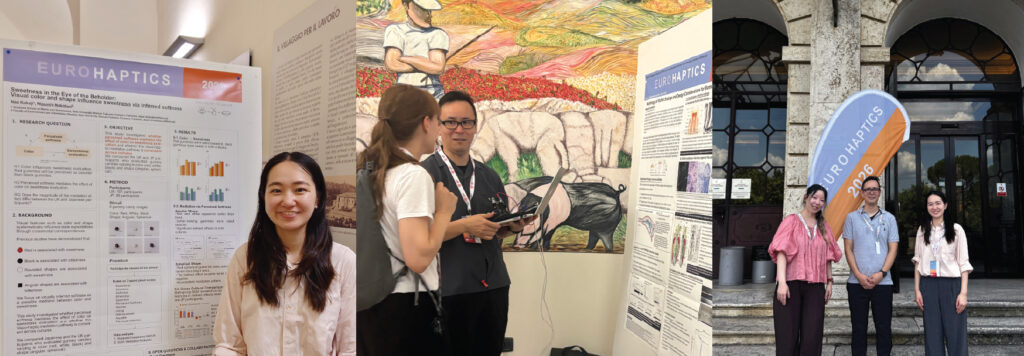
Presenting Two Research Outcomes at EuroHaptics 2026ヨーロッパ触覚学会(EuroHaptics 2026)で2件の研究発表を行いました。
Members of the Nakatani Laboratory participated in EuroHaptics 2026, held in Siena and Rome, Italy, where we presented two research projects.
The first presentation was:
Poster Session (PS 22)
Sweetness in the Eye of the Beholder: Visual Color and Shape Influence Sweetness via Inferred Softness
Nao Kokaji, Masashi Nakatani
This study investigated how visual cues, such as color and shape, influence perceived sweetness through inferred softness. The findings provide new insights into crossmodal perception and the mechanisms through which visual information shapes flavor expectations.
The second presentation was delivered in the Work-in-Progress Session:
Work-in-Progress Session (PS 62)
Morphology of Ruffini Endings and the Design of Biomimetic Sensor
Masashi Nakatani
This work introduced a biomimetic tactile sensor inspired by the morphology of Ruffini endings. By focusing on the elongated structure of this slowly adapting mechanoreceptor, we discussed a new design concept for artificial tactile sensors capable of detecting skin stretch and deformation.
In addition to our own presentations, we were delighted to reunite with Yang Gao, a research collaborator from Professor Charles Spence's laboratory at the University of Oxford. It was wonderful to catch up after our collaborative research in Oxford and to exchange ideas on future projects.
Yang presented the following work:
Poster Session (PS 41)
Enhancing the Experience of Film with a Wearable Tactile/Haptic Suit
Yang Gao, Guoqiang Liu, Charles Spence
His research explores how wearable tactile technology can enhance the cinematic experience by integrating tactile stimulation with audiovisual media.
EuroHaptics once again provided an excellent opportunity to exchange ideas with researchers from around the world. The conference was followed by the EuroHaptics Summer School, where students and early-career researchers engaged in lively discussions with leading scientists in the field.
We sincerely thank everyone who visited our posters and shared valuable comments and suggestions. We look forward to further developing these projects and strengthening our international collaborations.
仲谷研究室は、イタリア(シエナ・ローマ)で開催されたEuroHaptics 2026に参加し、2件の研究発表を行いました。
1件目はポスターセッションにおいて、
【PS22】Sweetness in the Eye of the Beholder: Visual Color and Shape Influence Sweetness via Inferred Softness
Nao Kokaji & Masashi Nakatani
を発表しました。本研究では、色や形といった視覚情報が、「柔らかそう」という推論を介して甘さの知覚に影響を与えることを示し、視覚と味覚のクロスモーダル知覚に関する新たな知見を報告しました。
2件目はWork-in-Progress Sessionにおいて、
【PS62】Morphology of Ruffini Endings and the Design of Biomimetic Sensor
Masashi Nakatani (single author)
を発表しました。皮膚の伸展を検出する機械受容器であるルフィニ終末の形態に着目し、その構造を模倣したバイオミメティック触覚センサの設計コンセプトを紹介しました。
また、オックスフォード大学Charles Spence研究室で共同研究を進めているYang Gaoさんとも再会し、研究交流を深めることができました。Yangさんは、
【PS41】Enhancing the Experience of Film with a Wearable Tactile/Haptic Suit
Yang Gao, Guoqiang Liu, Charles Spence
を発表し、ウェアラブル触覚スーツによって映画鑑賞体験を拡張する研究成果を紹介しました。
会期中は世界各国の研究者との活発な議論をすることができ、多くの研究者との交流を深めることができました。
ポスターをご覧いただき、貴重なご意見・ご助言をくださった皆様に心より感謝申し上げます。今後も触覚・クロスモーダル知覚・触覚の機械受容器の研究をさらに発展させるとともに、国際共同研究も積極的に推進してまいります。
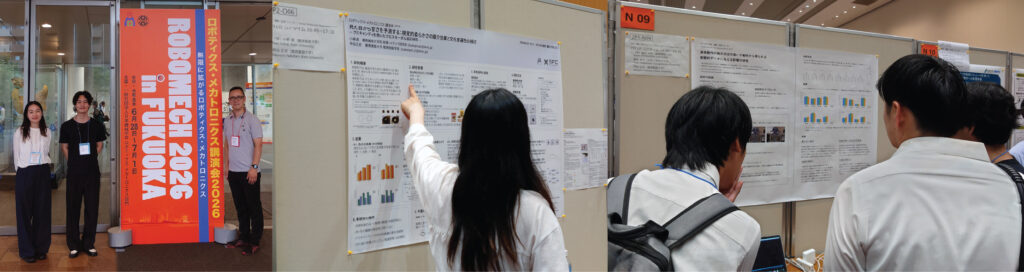
Presenting Three Research Projects at ROBOMECH 2026 / ロボティクス・メカトロニクス講演会2026(ROBOMEC 2026)に参加し、3件の研究発表を行いました。
Members of the Nakatani Laboratory participated in ROBOMECH 2026 (The Robotics and Mechatronics Conference 2026) and presented three research projects related to tactile sensing, human movement, and crossmodal perception.
Our presentations were:
2A1-F05: Morphology of Ruffini Endings and a Sensor Inspired by Their Structure – First Report
Masashi Nakatani
This study introduced the first report on a biomimetic tactile sensor inspired by the morphology of Ruffini endings, mechanoreceptors responsible for detecting skin stretch. The work explores how biological tactile mechanisms can inspire the design of next-generation tactile sensors.
2P1-N09: Effects of Different Instruction Methods for Body Movements on Objective Motion Data
Kaisei Tomita, Yuko Hashimoto, Masashi Nakatani
This study investigated how different methods of instructing body movements influence objectively measured motion data. The findings contribute to the design of motion measurement protocols and human movement analysis.
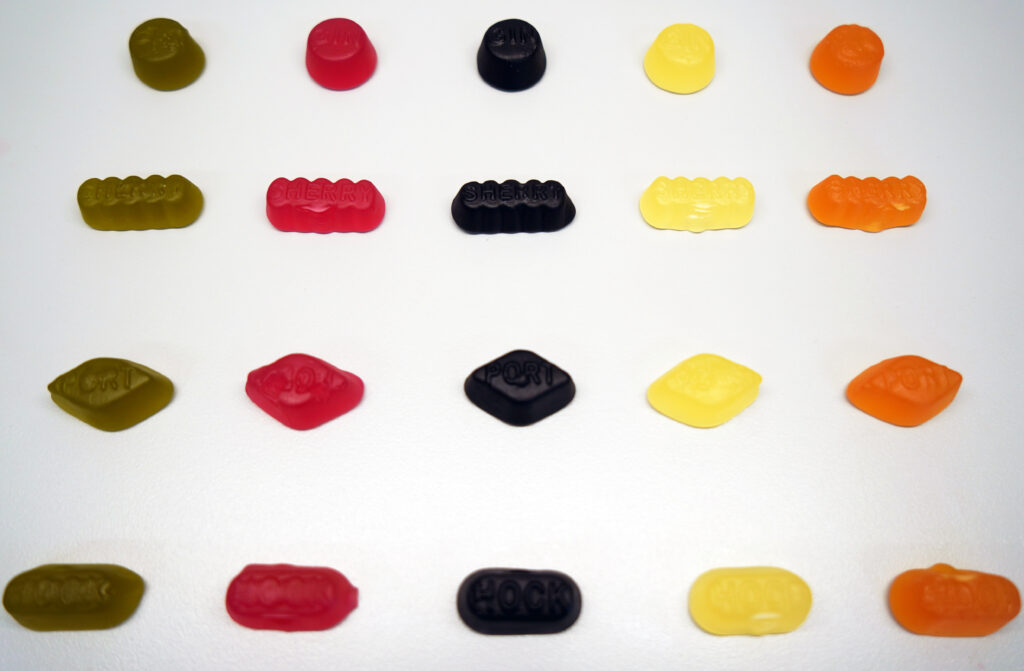
2P2-O06: Crossmodal Correspondences Between Visual–Tactile Texture and Taste of Gummy Candies
Nao Kokaji, Masashi Nakatani
This research examined the relationships between the visual and tactile texture of gummy candies and taste perception. The results provide new insights into crossmodal perception and may contribute to future food and sensory design.
ROBOMEC 2026 provided an excellent opportunity to exchange ideas with researchers from diverse fields of robotics, mechatronics, and human sensing. We sincerely thank everyone who attended our presentations and shared valuable comments and suggestions.
ROBOMEC 2026に参加し、3件の研究発表を行いました
仲谷研究室は、ロボティクス・メカトロニクス講演会2026(ROBOMECH 2026)に参加し、触覚センシング、身体運動計測、クロスモーダル知覚に関する3件の研究発表を行いました。
2A1-F05 「ルフィニ終末の形態とそれを模倣したセンサの検討 第一報」
仲谷 正史
皮膚の伸展を検出する機械受容器であるルフィニ終末の形態に着目し、その構造を模倣したバイオミメティック触覚センサの設計について報告しました。生体の触覚受容器から学ぶことで、次世代の触覚センシング技術の実現を目指しています。
2P1-N09 「身体動作の教示方法の違いが動作から得られる客観的データに与える影響の研究」
富田 快成・橋本 有子・仲谷 正史
身体動作の教示方法の違いが、モーションデータなどの客観的指標にどのような影響を与えるかを検討しました。身体運動の計測・解析手法の高度化に向けた基礎的知見を報告しました。
2P2-O06 「グミキャンディの視触覚質感と味のクロスモーダル対応関係」
小梶 直・仲谷 正史
グミキャンディの見た目や触感と味覚との対応関係について検討し、視覚・触覚情報が味の知覚に与える影響を調べました。食品デザインやクロスモーダル知覚の理解につながる研究成果を紹介しました。
SFC TOUCH LAB 2026 SS Open Labを開催しました。
2026年度春学期のSFC TOUCH LAB研究会成果発表会をλ13教室で開催します。
参加希望の方は下記のGoogle Formより申込ください。
https://forms.gle/tVZrLPykXkLqxgXV8
Date:
7/16/2026 (Thursday)
Time:1:30pm-4:30pm
Venue: λ13
Schedule:
1:30-1:35 pm | Research Lab overview | 研究会の説明
1:35-2:10 pm | Master's students (M1), Oral presentation (1 student)
2:10-4:00 pm | Undergraduate Project , Oral Presentation (5 students)
4:00-4:15 pm | Closing remark
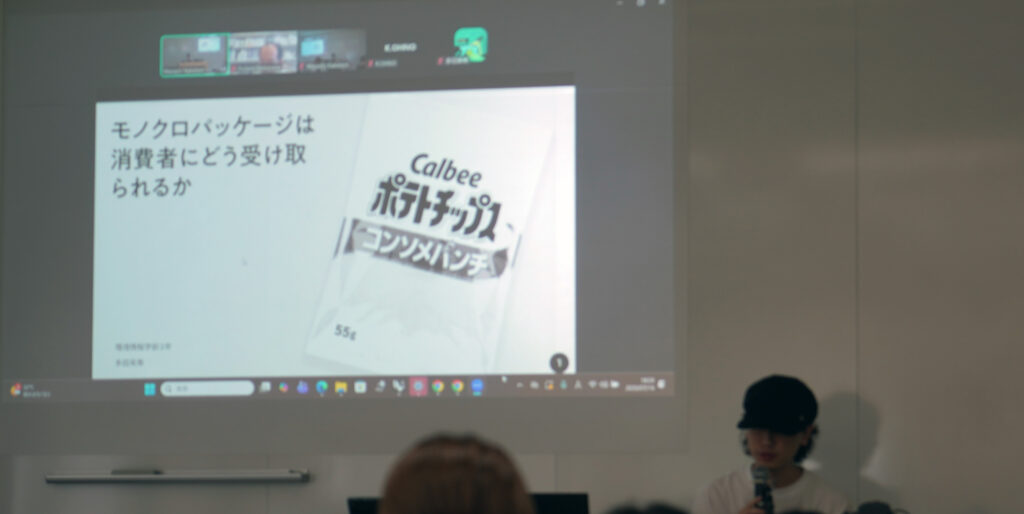
修士・学部生の合計6名が、各々の研究の成果や今後の研究展望について発表し、講評者と議論しました。
オンサイトでご参加いただき、たくさんのご質問をお寄せくださった皆さま、文学部 若澤佑典先生、環境情報学部のタ先生、心より御礼申し上げます。
A total of six master's and undergraduate students presented the outcomes of their research and their future research directions, followed by engaging discussions with the invited commentators.
We would like to express our sincere appreciation to everyone who attended the session onsite and asked thoughtful questions, as well as to Professor Yusuke Wakasawa (Faculty of Letters) and Professor Ta Tung (Faculty of Environment and Information Studies) for serving as commentators.
New paper published with Oxford University
Multisensory Research誌に、Oxford University 滞在時より執筆していたレビュー論文が刊行されました。
Material Dependency of Crossmodal Correspondences in Shitsukan (with a Focus on Food)
Masashi Nakatani (Keio University) & Charles Spence (Oxford University)
Multisensory Research (published online ahead of print 2026).
https://doi.org/10.1163/22134808-bja10196
2026/6/2付けで、慶應義塾大学から、プレスリリースも発出していただきました。
食べ物の「おいしそう」は、形や色だけで決まらない
-質感に依存する感覚間協応の理論的枠組みを提案-
https://www.keio.ac.jp/ja/press-release/20260602-press-02
慶應SFCで開講している仲谷研究会では、引き続き、クロスモーダル協応研究と触覚研究に取り組んでゆきます。
New paper uploaded in arXiv
ヒトの柔らかさ知覚の研究をarXivにアップロードしました。
Heterogeneous Layered Structures Can Modulate Human Softness Perception
Yuno Higuchi, Yosuke Iwashita, Yuji Ohgi, Masashi Nakatani
https://arxiv.org/abs/2604.20092
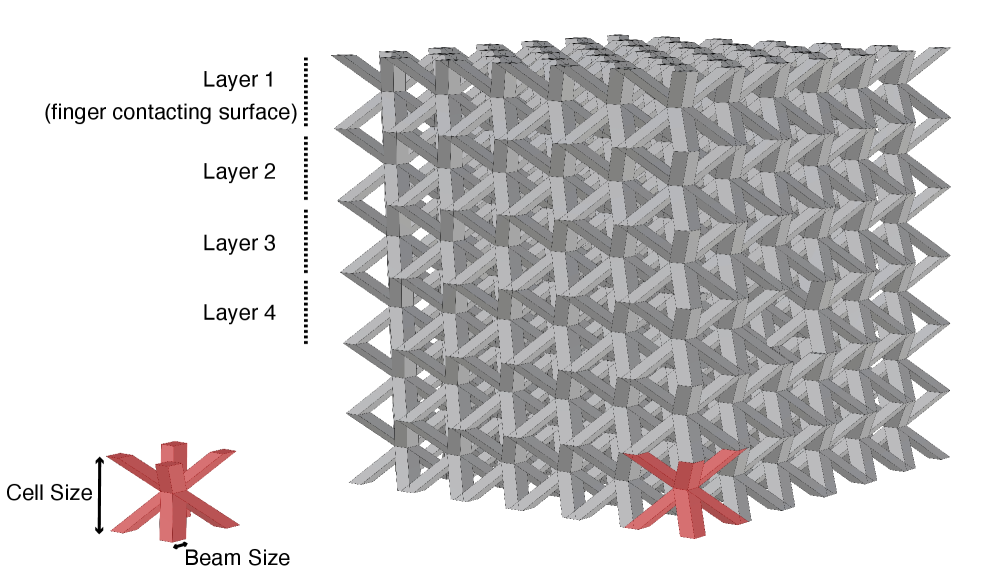
Human softness perception in haptics has mainly been studied using mechanically homogeneous objects, despite the fact that many real-world objects exhibit heterogeneous layered structures with nonuniform stiffness. This study examined how layered heterogeneity modulates haptic softness perception. Sixteen lattice-structured stimuli were fabricated by 3D printing, with the stiffness of the upper four layers systematically varied while the bottom two layers remained fixed. Twenty-two participants evaluated the softness of the stimuli in a psychophysical task, and compression tests were conducted to quantify their mechanical properties. Perceived softness was significantly predicted by displacement under load, however, perceptual ranking did not fully coincide with the physical ranking. Linear mixed-effects analyses showed that the softness of the outermost layer had the greatest impact on the perceived softness. Perceived softness also increased as the number of soft subsurface layers increased, although this contribution decreased with depth. Layers 2 and 3 showed significant effects, whereas Layer 4 did not. These findings suggest that haptic softness perception depends not only on the overall stiffness but also on the depth-dependent distribution of compliance within layered structures.
ハプティクスにおける人間の柔らかさ知覚は、これまで主に、機械的に均質な対象物を用いて研究されてきた。しかし、実世界の多くの対象物は、剛性が一様ではない不均一な層状構造を有している。本研究では、このような層状の不均一性が、触覚による柔らかさ知覚をどのように変調するのかを検討した。
本研究では、3Dプリントにより16種類の格子構造刺激を作製した。これらの刺激では、上部4層の剛性を系統的に変化させる一方で、下部2層は固定した。22名の参加者が心理物理実験において各刺激の柔らかさを評価し、さらに圧縮試験を行うことで、それぞれの機械的特性を定量化した。その結果、知覚された柔らかさは、荷重下での変位量によって有意に予測された。しかし、知覚上の順位は、物理的特性に基づく順位と完全には一致しなかった。線形混合効果モデルによる分析の結果、最外層の柔らかさが、知覚された柔らかさに最も大きな影響を与えることが示された。また、柔らかい下層の数が増えるほど知覚される柔らかさは増加したが、その寄与は深さとともに減少した。第2層および第3層は有意な効果を示した一方で、第4層の効果は有意ではなかった。
これらの知見は、触覚による柔らかさ知覚が、対象物全体の剛性だけでなく、層状構造内部におけるコンプライアンスの深さ依存的な分布にも依存することを示唆している。
SFC TOUCH LAB 2026 AW Open Labを開催します。
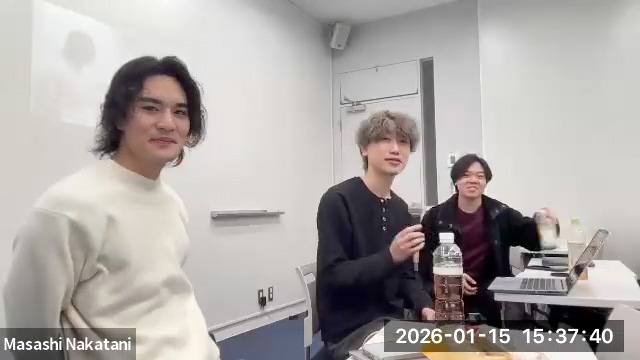
2025年度秋学期のSFC TOUCH LAB研究会成果発表会をi21教室で開催します。
参加希望の方は下記のGoogle Formより申込ください。
https://forms.gle/2w8c6pQNHSbJuxTr5
Date:
1/15/2026 (Thursday)
Time:1:30pm-3:30pm
Venue: i21
Schedule:
1:30-1:35 pm | Research Lab overview | 研究会の説明
1:35-2:10 pm | Master's students (M1), Oral presentation (1 student)
2:10-3:00 pm | Undergraduate Project , Oral Presentation (2 students)
3:00-3:30 pm | Closing remark
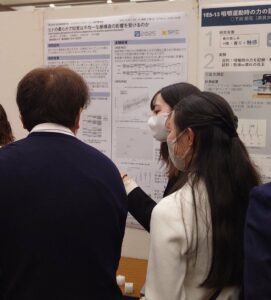
第26回計測自動制御学会システムインテグレーション部門講演会 (SI2025)にて発表しました。
2025年12月10日~12日の期間で広島国際会議場で開催された第26回計測自動制御学会システムインテグレーション部門講演会にて、研究成果を発表しました。
1E5-14 ヒトの柔らかさ知覚は不均一な層構造の影響を受けるのか
樋口夢乃,岩下耀介,永島徹也,仲谷正史,仰木裕嗣
本研究は、不均一な層状構造が人間の柔らかさ知覚に及ぼす影響を明らかにすることを目的とした。柔らかさ知覚は、日常生活における製品評価において重要な役割を果たしている。これまでの触覚研究では、対象物全体の柔らかさを一様に変化させた刺激が主に用いられてきた。しかし、現実世界には、複数の異なる層や材料から構成される、不均一な柔らかさをもつ対象物が数多く存在する。例えば、硬い外皮と柔らかい内部をもつ果物や、複数の層状材料から構成されるマットレスや枕などが挙げられる。人間がこのような対象物に触れた際に、柔らかさの不均一性が知覚にどのような影響を及ぼすのかについては、いまだ十分に明らかになっていない。そこで本研究では、全体として柔らかさの不均一性を有する対象物に対する人間の柔らかさ知覚を検討した。
This study aims to clarify the effects of heterogeneous layered structures on human softness perception. Softness perception plays an essential role in evaluating products in daily life. Previous studies have uniformly varied the softness of the entire object. However, the real world contains numerous objects with heterogeneous softness, composed of multiple distinct layers or materials. Examples include fruits with a hard exterior and soft interior, or mattresses and pillows made from layered materials. How this heterogeneity affects softness perception when humans touch such objects remains poorly understood.
Therefore, this study investigated human softness perception for objects exhibiting overall softness heterogeneity.
ハプティクス研究委員会 第35回研究会にて発表しました。
HAP02-4 不均一層構造がヒトの柔らかさ知覚に及ぼす影響
樋口夢乃,岩下耀介,永島徹也,仲谷正史,仰木裕嗣
本研究は, ヒトが不均一な柔らかさを持つ層構造物体に触れたときにどのような柔らかさ知覚するかを明らかにすることを目的とした. 層構造の異なる16 種類の触覚刺激を提示し, 実験参加者に主観的な順位評価を求めた. 本稿では,その中でも,指腹部接触部の柔軟に違いがある層構造物体(T1~T4:接触部硬,T5~T8: 接触部柔)を対象に解析を行った. 回帰分析の結果, 内部の硬い層が多いほど柔らかさ知覚の順位が有意に上昇し(硬く感じられ), 層構造の内部の柔軟の違いがヒトの評価に系統的な影響を及ぼすことが示された. また, 一部の層構造においては柔らかい層が硬い層に挟まれていた場合,その厚さの違いで柔らかさ知覚が統計的有意に異なることも示された. 以上の結果から, 硬軟層構造の分布は柔らかさ知覚に非線形的な影響を及ぼす可能性が示唆された.
The aim of this study is to clarify how humans perceive softness when touching layered objects of non-uniform softness. Sixteen different tactile stimuli with varying layered structures were presented to participants, who were asked to provide subjective ranking evaluations. This paper focuses on the analysis of layered objects with varying softness at the fingertip contact area (T1–T4: hard contact area; T5–T8: soft contact area). Regression analysis revealed that the greater the number of hard layers present internally, the higher the perceived softness ranking increased significantly (i.e. objects were perceived as harder), indicating that differences in internal softness systematically influence human perception of softness. Furthermore, for particular layered structures, the perceived softness differed statistically significantly depending on the thickness of the soft layers when a soft layer was sandwiched between hard layers. Our results suggest that the distribution of hard and soft layers may exert a non-linear influence on human perception of softness.
New paper published: The Facial Carving Illusion – Natural Background can Modulate the Perception of Facial Carving
Vision誌から、彫り感錯覚に関する論文が刊行されました。
Odera, M., Mori, M., & Nakatani, M. The Facial Carving Illusion: Natural Background can Modulate the Perception of Facial Carving. doi:10.24636/vision.37.4_153
https://www.jstage.jst.go.jp/article/vision/37/4/37_153/_article/-char/en
Abstract
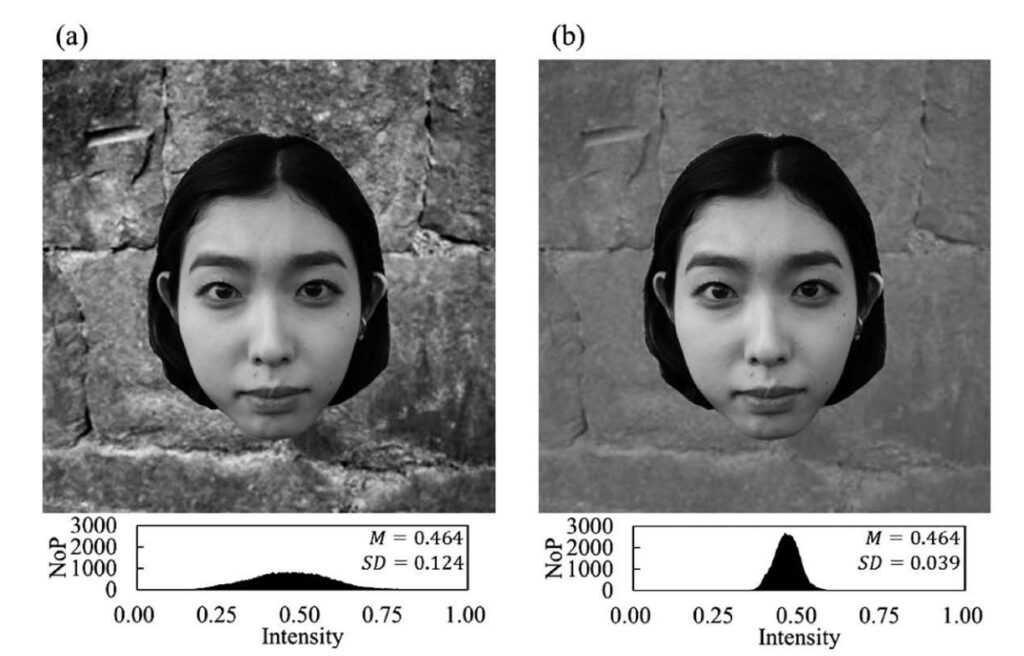
The shading and shadow of the face are essential information forming the impression of a person’s face. This study presented the facial carving illusion: although the face in the foreground is the same, the facial carving is perceived to be more profound when the background is changed. We demonstrated several examples of the contrast and intensity of natural backgrounds changing the depth perception of the nose. Furthermore, this study investigated the effect of background image statistics on the perception of facial carving under controlled laboratory conditions. The experiment revealed that the perception of facial carving is most pronounced when a low mean and large variation of the intensity distribution characterize the background. These results suggest that a dark background and high contrast enhance the perception of facial carving. We concluded that the facial carving illusion includes one of the phenomena of brightness assimilation.
顔の陰影や影は、その人の顔の印象を形成するうえで重要な情報である。本研究では、「顔の彫り錯視」を提示した。これは、前景にある顔そのものは同一であるにもかかわらず、背景が変化することで、顔の彫りがより深く知覚されるという現象である。
本研究では、自然背景のコントラストや明るさの強さが、鼻の奥行き知覚を変化させる複数の例を示した。さらに、統制された実験室条件下において、背景画像の統計的特性が顔の彫りの知覚に及ぼす影響を検討した。実験の結果、背景の輝度分布が低い平均値と大きなばらつきによって特徴づけられる場合に、顔の彫りの知覚が最も顕著になることが明らかになった。これらの結果は、暗い背景と高いコントラストが、顔の彫りの知覚を強めることを示唆している。本研究では、顔の彫り錯視は明るさの同化現象の一つを含むものであると結論づけた。